


Perforated Galvanized Steel Sheet
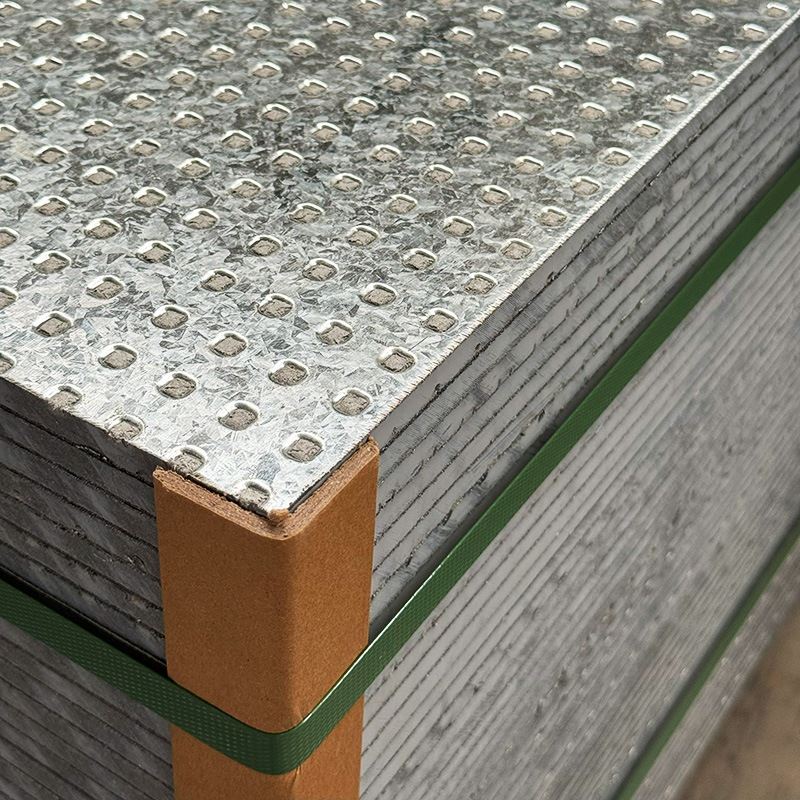
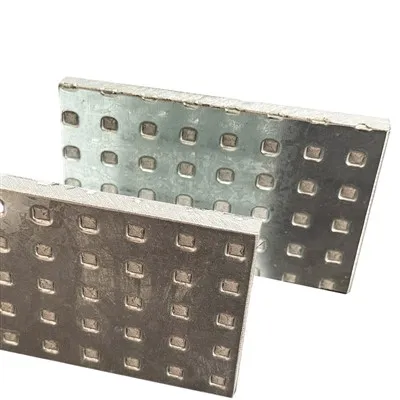
Structurally speaking, this galvanized steel skin adopts precise stamping perforation craftsmanship. Uniformly distributed small stamped holes run through the steel surface, which you can observe clearly from the product close‑up shot. These orderly arranged perforations are not manufactured for decorative purposes. During the hot‑press compounding production procedure, cement‑based raw materials can penetrate through these tiny holes and interlock mechanically with the metal sheet. This mechanical interlocking mechanism creates extremely strong bonding force between metal skin and fiber‑cement core body. Under intense blast shock wave impact, it effectively prevents delamination, peeling or skin falling‑off that frequently troubles ordinary composite boards with plain flat steel veneer. Without such perforated interlock design, steel cladding may separate from cement substrate under sudden explosive load, causing secondary fragment injury to personnel inside the building.
Base material selection adopts hot‑dip galvanized steel substrate instead of cold‑rolled non‑galvanized steel. Complete zinc coating covers both front face, back side and hole inner wall of each perforated galvanized steel sheet. Even the inner edge of every stamped hole retains continuous zinc protective layer after punching processing. Many low‑cost alternative products only complete galvanizing before stamping, which destroys local anti‑rust coating around hole edges and brings hidden corrosion risks in humid, damp or chemical‑vapor‑filled plant environments. Our manufacturing flow arranges stamping first followed by integrated hot‑dip galvanizing treatment, ensuring every hole perimeter maintains full‑range zinc‑rich anti‑corrosion barrier.
In terms of mechanical features, the steel skin delivers dual‑direction performance. On one hand, metallic steel sheet provides high tensile strength to resist instant tearing triggered by blast overpressure. On the other hand, the perforated layout releases partial instantaneous stress, avoiding rigid brittle fracture when shock wave hits wall surfaces directly. Combined with high‑density fiber‑cement core material, the whole composite panel absorbs explosion energy through layered deformation, instead of shattering into sharp flying fragments. Stacked finished‑product photos display panel stacks bundled with green strapping tapes and corner paper protectors. Each panel keeps flat steel surface without local warping or bulge. Strict flatness control for perforated galvanized steel sheet is essential: uneven metal veneer will cause incomplete compounding and hidden gaps between steel and cement core during hot pressing.
Compared with non‑perforated galvanized steel cladding, the biggest structural advantage lies in reliable interlock bonding performance. For conventional flat steel veneer composite boards, bonding merely depends on interface adhesive glue. Once encountering high‑temperature impact or long‑time humidity erosion, adhesive may fail, and metal layer will peel away. Perforated structure achieves physical occlusion interlock, supplementing chemical adhesive bonding. Even under harsh working conditions, the combination status of metal skin and cement matrix remains stable. Meanwhile, galvanized layer resists atmospheric oxidation, water vapor erosion and weak chemical medium corrosion inside factories, extending panel service life without frequent surface anti‑rust repainting maintenance.
For engineering design consultants, material parameter indicators of perforated galvanized steel sheet should be taken into full consideration during early‑stage wall‑system design. Steel thickness, hole spacing, hole diameter, zinc coating weight will jointly influence final blast‑resistance grade of whole composite panels. It cannot simply replace with general perforated metal sheet used for ventilation grille or decorative screen. This special blast‑grade perforated galvanized steel sheet has adjusted hole layout density and steel tensile indexes, oriented towards explosion‑resistant functional requirement rather than ventilation or decoration demand.
Application scenarios under engineering dimension mainly cover chemical processing workshops, pharmaceutical production plants, energy‑industry auxiliary buildings, hazardous‑material storage warehouses and refinery on‑site partition walls. In these projects, blast‑resistant composite panels undertake pressure‑relief and fragment‑blocking missions, and perforated galvanized steel sheet serves as the first‑line protective barrier of the whole system. When explosion accidents happen, this metal skin bears initial shock‑wave impact, shares explosive load together with inner fiber‑cement core, lowers possibility of wall body collapsing, and reduces secondary harm brought by broken building fragments to field staff and equipment
Hot Tags: perforated galvanized steel sheet, China perforated galvanized steel sheet manufacturers, suppliers, factory, Cement Steel Composite Panel, Durable Fiber Cement Composite Steel Plate, Fiber Cement and Steel Composite Board, Fiber Cement Composite Steel Plate for Ceilings, Fiber Cement Explosion Proof Board, Waterproof Fiber Cement Composite Steel Plate
You Might Also Like



Send Inquiry