


A1 Non‑combustible Fire Rating
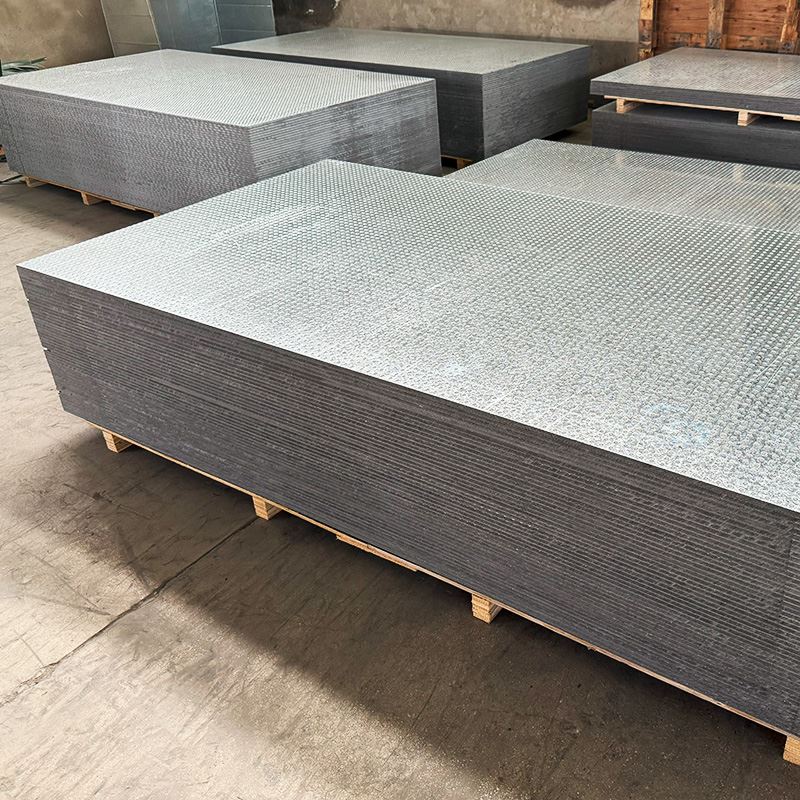
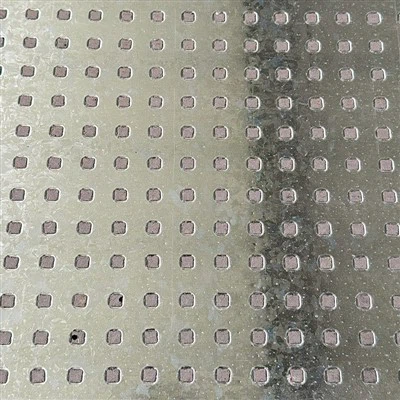
Looking at the physical structure of the panel shown in factory real‑shot photos, the board consists of two indispensable parts: perforated hot‑dip galvanized steel sheet as exterior protective skin, and high‑density inorganic fiber‑cement core inside. Unlike organic‑mixed fire‑proof boards which add fire‑retardant additives into polymer substrates, our core substrate adopts purely inorganic fiber‑cement formula. There is no flammable organic resin component inside the core layer, which lays the fundamental foundation for A1 non‑combustible fire‑rating performance. The densely arranged uniform perforations on galvanized steel sheet are not for ventilation or decorative purpose. During high‑temperature hot‑press compounding procedure, liquid‑state fiber‑cement raw material penetrates through these tiny holes and solidifies, creating mechanical interlocking occlusion between metal skin and cement core. This physical interlock structure is critical for maintaining A1‑grade fire‑safety performance under real‑fire conditions.
Many competing fire‑resistant boards can pass short‑time surface fire tests, yet once the adhesive bonding layer fails under high‑temperature baking, surface veneer will peel off rapidly. After delamination occurs, inner substrate will be directly exposed to flame, and the whole board will lose original fire‑separation capacity. Thanks to the perforated interlocking mechanism, our composite panel avoids this fatal defect. Even under long‑duration high‑temperature fire environment, the galvanized steel skin and fiber‑cement core remain tightly combined as one integral body. The metal layer will not fall off in pieces, so the inorganic core can keep playing its A1‑grade non‑combustible function continuously.
In terms of core fire‑safety features brought by A1 non‑combustible fire rating, three key advantages stand out. First, zero flame‑propagation risk. When encountering open fire, the panel itself will not burn, will not generate burning drips or molten fragments that ignite surrounding articles. Second, low‑smoke & low‑toxicity performance. Under fire scenarios, it barely releases hazardous smoke and poisonous volatile substances, reserving more safe evacuation time for on‑site personnel. Third, stable high‑temperature structural integrity. Different from gypsum‑based boards which will pulverize and collapse after long‑time fire baking, the inorganic fiber‑cement core retains basic structural strength under heat, sustaining partition‑wall integrity for fire‑isolation purpose.
The hot‑dip galvanized steel outer skin further complements the A1‑grade material performance. The galvanized metal sheet serves as physical heat‑shield barrier, slowing heat radiation transfer to the back side of partition wall. Meanwhile, it delivers mechanical impact resistance which pure A1‑class inorganic boards lack. Single fiber‑cement boards are brittle and prone to cracking under mechanical collision; steel‑clad composite panel resists daily impact in factory workshops without breaking, keeping its A1 non‑combustible property intact in long‑term service.
It is worth noting that A1 non‑combustible fire rating is a material‑level testing result for the whole composite panel, not merely for the cement core alone. Some suppliers only provide test reports of single fiber‑cement core material, ignoring performance changes after compounding with metal veneer. Such partial reports cannot support real‑world project acceptance. Our finished composite panels complete full‑panel third‑party fire‑safety testing, and obtain formal documents verifying A1 non‑combustible fire rating for the complete steel‑cement composite finished product.
Typical application scenarios for panels with A1 non‑combustible fire rating cover fire‑isolation partition walls for battery‑energy‑storage cabins, fire‑separation compartments inside fine‑chemical plants, dividing walls for dangerous‑goods storage depots, fire‑safety separation for powder‑processing workshops, and fire‑rated partition for industrial‑park renovation projects. For fire‑protection designers and engineering consultants, selecting A1 non‑combustible composite steel panels helps satisfy code requirements for passive fire‑protection, and also takes potential blast‑impact risks into account for high‑risk sites. In actual fire accidents, such panels restrain fire spreading, lower smoke hazard, and offer reliable passive safety guarantee for personnel and valuable production equipment inside buildings.
Hot Tags: a1 non‑combustible fire rating, China a1 non‑combustible fire rating manufacturers, suppliers, factory, Blast Proof Fire Resistant Wall Partition, Cement Steel Composite Panel, Fiber Cement Composite Steel Plate 0 5, Fiber Cement Composite Steel Plate for Fuel Pipes, Moisture resistant Fiber Cement Composite Steel Plate, Rectangular Fiber Cement Composite Steel Plate
Previous
No InformationYou Might Also Like




Send Inquiry