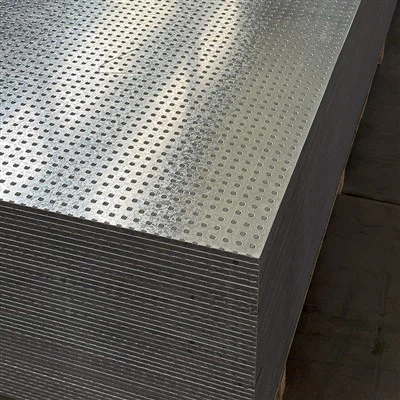
In industrial settings, especially those exposed to chemicals, the safety and durability of building materials are of utmost importance. Fire Resistant Blastproof Steel Cement Boards have emerged as a reliable solution for such environments. As a supplier of these boards, I have witnessed firsthand their performance and benefits in chemical - exposed areas.
Understanding the Chemical - Exposed Environment
Chemical - exposed areas can range from chemical manufacturing plants to laboratories and storage facilities. These areas are often filled with various hazardous substances, including acids, alkalis, solvents, and flammable gases. The presence of these chemicals poses multiple threats, such as corrosion, chemical reactions that can lead to fires or explosions, and damage to building structures.
Corrosion is one of the most significant concerns. Chemicals can react with the materials of a building, gradually weakening them over time. For example, acids can dissolve metal components, while alkalis can cause the breakdown of certain types of concrete. In addition, the risk of fire and explosion is ever - present. Flammable chemicals can ignite easily, and a small spark can trigger a large - scale disaster.
Features of Fire Resistant Blastproof Steel Cement Boards
Fire Resistant Blastproof Steel Cement Boards are designed to withstand these harsh conditions. These boards are a combination of steel, cement, and other additives, which gives them unique properties.
Fire Resistance
The primary function of these boards is to resist fire. They are made with fire - resistant materials that can prevent the spread of flames and heat. In case of a fire, the boards act as a barrier, protecting the structure and the people inside. The cement component in the boards has a high melting point, and the steel provides additional strength and stability. This combination ensures that the boards can maintain their integrity even at high temperatures.
Blastproof Capability
In addition to fire resistance, these boards are also blastproof. They can absorb and disperse the energy from an explosion, reducing the impact on the surrounding area. The steel layer in the boards acts as a shock absorber, while the cement matrix helps to hold the structure together. This makes them suitable for areas where there is a risk of explosions, such as chemical storage facilities.
Chemical Resistance
One of the key features of Fire Resistant Blastproof Steel Cement Boards is their chemical resistance. The boards are coated with special chemicals that can protect them from corrosion and chemical reactions. The cement and steel components are also inherently resistant to many chemicals. For example, they can withstand the effects of acids, alkalis, and solvents. This makes them ideal for use in chemical - exposed areas, where other materials may quickly deteriorate.
Performance in Chemical - Exposed Areas
Corrosion Resistance
In chemical - exposed areas, corrosion is a major problem. Fire Resistant Blastproof Steel Cement Boards have excellent corrosion resistance. The steel in the boards is often treated with anti - corrosion coatings, which can prevent the formation of rust. The cement matrix also provides a protective layer, preventing chemicals from reaching the steel. This means that the boards can maintain their structural integrity over a long period of time, even in highly corrosive environments.
Fire and Explosion Protection
As mentioned earlier, fire and explosion are significant risks in chemical - exposed areas. The fire - resistant and blastproof properties of these boards make them an ideal choice for such environments. In case of a fire, the boards can prevent the spread of flames, giving people more time to evacuate. In the event of an explosion, the boards can absorb the shockwaves, reducing the damage to the building and the surrounding area.
Long - Term Durability
The durability of Fire Resistant Blastproof Steel Cement Boards is another advantage in chemical - exposed areas. These boards are designed to last for a long time, even under harsh conditions. The combination of steel and cement provides a strong and stable structure, which can withstand the effects of chemicals, fire, and explosions. This means that the boards do not need to be replaced frequently, reducing maintenance costs and downtime.
Comparison with Other Materials
When compared to other materials commonly used in chemical - exposed areas, Fire Resistant Blastproof Steel Cement Boards have several advantages.
Traditional Concrete
Traditional concrete is often used in building construction, but it has limitations in chemical - exposed areas. Concrete can be damaged by acids and alkalis, and it is not very fire - resistant or blastproof. In contrast, Fire Resistant Blastproof Steel Cement Boards are more resistant to chemicals, fire, and explosions, making them a better choice for these environments.


Metal Panels
Metal panels are another option, but they are prone to corrosion in chemical - exposed areas. The steel in the Fire Resistant Blastproof Steel Cement Boards is protected by the cement matrix and anti - corrosion coatings, making them more resistant to corrosion than metal panels. In addition, the fire - resistant and blastproof properties of the boards are superior to those of metal panels.
Applications in Chemical - Exposed Areas
Fire Resistant Blastproof Steel Cement Boards have a wide range of applications in chemical - exposed areas.
Chemical Manufacturing Plants
In chemical manufacturing plants, these boards can be used for wall partitions, ceilings, and flooring. They can protect the workers and the equipment from the hazards of chemicals, fire, and explosions. The boards can also be used to construct storage areas for chemicals, providing a safe and durable environment.
Laboratories
Laboratories are often filled with hazardous chemicals, and the risk of fire and explosion is high. Fire Resistant Blastproof Steel Cement Boards can be used to line the walls and floors of laboratories, providing a fire - resistant and blastproof barrier. This can help to prevent the spread of fires and explosions, protecting the researchers and the valuable equipment.
Storage Facilities
Storage facilities for chemicals need to be safe and durable. Fire Resistant Blastproof Steel Cement Boards can be used to construct the walls and roofs of these facilities, providing protection against fire, explosion, and chemical corrosion. The boards can also be used to separate different types of chemicals, reducing the risk of chemical reactions.
Related Products
We also offer related products that can complement the Fire Resistant Blastproof Steel Cement Boards. The Cement Fiber Reinforced Steel Plate is a high - strength product that combines the advantages of cement fiber and steel. It has excellent fire resistance and mechanical properties, making it suitable for use in chemical - exposed areas.
The Perforated Steel Explosion - proof Plate is designed to disperse the energy from an explosion. The perforations in the plate allow the shockwaves to pass through, reducing the impact on the surrounding area. This plate can be used in combination with the Fire Resistant Blastproof Steel Cement Boards to enhance the blastproof performance.
The Non - flammable Fiber Cement Composite Steel Plate is another product that is highly resistant to fire. It is made with non - flammable fiber cement and steel, providing a reliable fire - resistant solution for chemical - exposed areas.
Conclusion
Fire Resistant Blastproof Steel Cement Boards are an excellent choice for chemical - exposed areas. Their fire resistance, blastproof capability, and chemical resistance make them a reliable and durable solution. They can protect the structure and the people inside from the hazards of chemicals, fire, and explosions. If you are looking for a high - quality material for your chemical - exposed area, we invite you to contact us for a detailed discussion on your specific requirements. Our team of experts can provide you with the best solutions and help you make the right choice.
References
- ASTM International. (20XX). Standard test methods for fire - resistant materials.
- National Fire Protection Association. (20XX). Fire safety codes for industrial facilities.
- Chemical Safety Board. (20XX). Reports on chemical accidents and prevention measures.