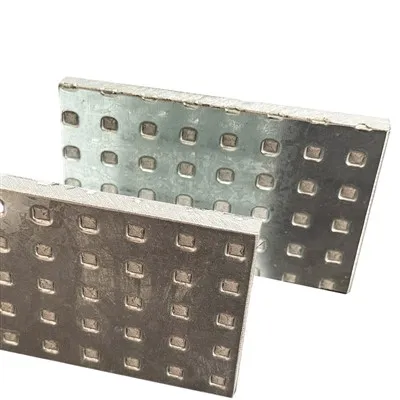
As a critical infrastructure for energy transmission, fuel pipelines have long faced safety risks such as leaks, explosions, and high-temperature burns. Traditional protective materials are either too heavy, lack sufficient fire and explosion resistance, or are complex to construct and maintain, making it difficult to balance safety and efficiency. Fiber cement composite steel plates utilize a sandwich structure of "0.5mm hot-dip galvanized perforated steel plate + 8.5mm fiber cement core layer," formed through high-temperature and high-pressure pressing, fundamentally overcoming the shortcomings of traditional materials. Its standard size is 1200×2400×9.5mm, but sizes can be customized according to pipeline protection requirements, offering excellent adaptability.
In terms of core performance, this composite steel plate achieves "maximum safety performance." With outstanding explosion-proof and impact-resistant capabilities, it can withstand explosion pressures of ≥1.5MPa. Even when exposed to the shockwave of an explosion from a fuel leak, the panel cracks but does not shatter, effectively absorbing impact energy and preventing flying debris, thus avoiding secondary injuries. Its fire resistance meets the A1 non-combustible standard, with a fire resistance limit exceeding 4 hours. It is non-combustible at high temperatures and does not release toxic fumes, providing long-term protection against the high-temperature environment surrounding fuel pipelines and blocking the spread of fire. It also boasts advantages such as lightweight yet high strength, durability, corrosion resistance, sound insulation, and heat insulation. Its surface density is only 23-25kg/m², weighing approximately one-third that of concrete, with a bending strength ≥185MPa. Installation load is low and construction is convenient. The double protection of the galvanized layer and cement core layer makes it oil-resistant, acid and alkali-resistant, and moisture-proof, perfectly suited to the complex, humid, and corrosive environment of fuel lines.
Currently, fiber cement composite steel plates are widely used in the protection of fuel pipelines in all scenarios. In explosion-proof enclosures for pipe corridors/trenches, it can be used to encase fuel pipelines, creating an explosion-proof isolation layer to prevent leaks and explosions from spreading to other areas. In fuel pump rooms and valve assembly rooms, it serves as an explosion-proof wall to separate hazardous and safe zones, resisting internal explosion impacts. It is also suitable for critical nodes such as pipeline crossing firewalls and emergency explosion relief isolation, replacing traditional sealing materials and achieving integrated fireproof, explosion-proof, and sealing protection. A case study from a coastal petrochemical base shows that the explosion-proof wall built using this composite steel plate successfully confined the shock wave within the tank area during a steam cloud explosion accident in a tank area, leaving surrounding equipment intact. Furthermore, it saved 42% in construction costs compared to concrete solutions, significantly reducing operation and maintenance costs.
Compared to traditional pure steel plates and concrete, fiber cement composite steel plates offer significant advantages. Compared to pure steel plates, it is lighter, has better fire resistance, and is lower in cost, with stronger explosion-proof energy absorption. Compared to concrete, it is lightweight, has a shorter construction period, and is reusable, facilitating subsequent pipeline inspection and maintenance, perfectly meeting the "safe, efficient, and economical" protection requirements for fuel pipelines.
Industry experts say that the large-scale application of fiber cement composite steel plates represents a significant technological upgrade in the field of fuel pipeline safety protection. In the future, as safety standards in the energy industry continue to rise, this material will be further applied in high-pressure fuel pipelines and high-risk transportation sections. By optimizing plate thickness and composite structure, the explosion-proof rating can be improved (up to 5.0 MPa), providing a more robust material guarantee for the safe and stable operation of my country's energy transmission network.