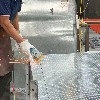
I. Industry and Product Overview Lightweight fiber cement steel composite panels are a new type of inorganic metal composite building material, made by high-pressure bonding of double-sided galvanized steel sheets and high-density fiber cement core material. They integrate the strength of metal with the fire resistance, sound insulation, and moisture resistance of cement-based materials, overcoming the shortcomings of traditional panels and making them suitable for green buildings, prefabricated projects, and various fire-resistant enclosure scenarios.
II. Industry Development Drivers
Policy-wise: Dual-carbon targets, green building standards, stringent fire safety regulations, and the promotion of prefabricated buildings are forcing the iteration of traditional high-energy-consuming building materials, driving the widespread adoption of A1-grade fire-resistant composite panels.
Market-wise: Industrial plants, explosion-proof partitions for computer rooms, fireproof renovations of public buildings, underground space construction, and renovation of old projects are continuously driving demand.
Technology-wise: Upgraded composite processes have resulted in lighter panels, optimized integrated performance, stable and durable structures, and significantly improved processing adaptability.
III. Market and Industrial Chain
The industry as a whole is experiencing steady growth, with its application coverage continuously expanding, gradually replacing traditional materials such as brick walls and gypsum board. The upstream consists of raw materials such as galvanized steel, cement, and plant fibers; the midstream consists of professional sheet metal manufacturing enterprises; and the downstream is widely used in industrial plants, commercial and public buildings, fire protection projects, underground facilities, and power rooms.
IV. Core Product Advantages
Possesses comprehensive properties including A1-grade non-combustible fire resistance, explosion-proof and impact-resistant properties, sound insulation and moisture resistance, and corrosion and rust prevention; lightweight, reducing building load; can be processed on-site, dry installation is highly efficient, saving construction time and costs; green and formaldehyde-free, weather-resistant and maintenance-free, long service life, and outstanding overall cost performance.
V. Industry Status and Development Trends
Currently, low-price competition and inconsistent quality are the main pain points in the low-end market. In the future, the industry will upgrade towards high-performance customization, low-carbon intelligent manufacturing, and functional integration, increasing industry concentration. High-quality composite panels will become the mainstream material for building fire protection, industrial enclosures, and commercial decoration.