For high-risk facilities in sectors such as chemical processing, power generation, and pharmaceuticals, planners and procurement teams often face a dilemma when designing protective partition walls. While cast-in-place concrete blast walls offer robust protection, they are extremely heavy-imposing significant loads on building foundations-and require long construction timelines. Conversely, conventional "explosion-venting" panels are designed to rupture during an explosion to release pressure; they are unsuitable for scenarios where the wall must remain intact to block shockwaves. Durable steel-reinforced cement blast panels-essentially fiber-cement composite steel boards-bridge this gap by combining blast resistance and fire protection with a lightweight design, making them a preferred choice for high-risk industrial zones.
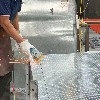
These panels feature an integrated, mechanically bonded composite structure: a fiber-reinforced cement core sandwiched between perforated galvanized steel sheets, which are hot-pressed and interlocked with the core rather than merely glued. Through high-pressure molding and controlled-temperature curing, the panels achieve exceptional structural integrity. In the event of an explosion, the outer steel sheets disperse the shockwave, while the internal cement core absorbs the blast energy through the formation of micro-cracks. This prevents the panel from shattering into dangerous, flying debris, thereby minimizing secondary damage. It is important to distinguish these from explosion-venting panels, as they operate on entirely different design principles; project engineers should be consulted to ensure the correct type is selected for the specific protective requirements. Rated as Class A1 non-combustible, these panels offer stable fire resistance-they will not collapse rapidly under high heat, nor do they release significant amounts of toxic smoke, making their fire-safety performance a key advantage.
The standard market size is 1200×2400 mm, with a 9.5 mm thickness being the most common; however, the thickness can be adjusted to meet specific structural load requirements. While galvanized steel is the standard facing material, it can be replaced with stainless steel for environments prone to severe corrosion. Compared to concrete blast walls, these panels are significantly lighter, placing less stress on the building's foundation and simplifying logistics, hoisting, and on-site installation. The panels themselves are moisture-resistant and chemically resistant (to both acids and alkalis), making them suitable for long-term use in coastal areas exposed to salt spray, underground utility tunnels, and damp industrial workshops. They also offer sound insulation properties, leading to their use in mechanical rooms and power generation facilities. However, they are not a universal solution; for projects involving extreme explosive loads, we conduct rigorous load-bearing calculations beforehand to provide an honest assessment of suitability-we do not accept orders blindly.
These panels are primarily used in high-risk industrial and infrastructure sectors. Key applications include blast-resistant partition walls and ceilings in petrochemical plants, hazardous chemical warehouses, and explosion-proof pharmaceutical workshops. They are also frequently used for fire and blast protection in substations, power distribution rooms, and cable tunnels, as well as for protective partitions in boiler rooms and fuel storage areas. Other common applications include protective systems for tunnels, underground utility tunnels, and offshore platforms, as well as blast-resistant doors, fire-rated ductwork, and the protection of steel structures. Many industrial projects specify these composite panels during the design phase precisely because they satisfy both explosion-proof and fire-resistance certification requirements.
Our project engagement begins with the verification of blueprints and protective parameters. Once a client provides the required blast-resistance rating, load specifications, and fire-rating duration, our technical team reviews the proposal and offers recommendations on panel selection, supporting framework (furring/joists), and edge-detailing-all in compliance with local regulations. The panels can be cut to size and delivered alongside specialized fasteners and sealing components to form a complete protective system. During the approval process for new projects, design institutes and project supervisors often request testing documentation; we can provide these reports for review and, where appropriate, send out physical samples.
Quality control centers on the two core performance metrics: explosion resistance and fire resistance. Upon the arrival of raw materials, we verify the density of the fiber-cement core and the thickness of the steel sheets, ensuring a strong bond between the steel and the core layer. Finished products undergo random sampling to test for blast resistance, fire-resistance limits, flexural strength, and impact resistance. Visual inspections focus on identifying defects such as delamination, blistering, or surface damage. We provide third-party test reports and CE-related documentation to facilitate project review and certification submissions. Our primary mode of cooperation involves the supply of integrated material packages for specific projects. Panel specifications can be customized to meet project requirements, and we can also bundle necessary auxiliary materials into a single shipment. We offer flexible order volume options-whether you need samples for a project, small-batch trial supplies, or phased, long-term deliveries for large-scale construction, we can accommodate your needs. Our packaging utilizes moisture-resistant materials and palletized securing to minimize the risk of surface damage or moisture exposure during long-distance transit, particularly during ocean freight.
If you are seeking a stable supplier of durable, explosion-proof cement boards, please share your project blueprints and protection specifications with us. Our engineers will assess your site conditions to develop a tailored solution, including detailed cost estimates and delivery timelines. We can also provide samples and technical test documentation for your project team's evaluation. For long-term project partnerships, we ensure consistent product quality across every batch, delivering reliable explosion-proof and fire-resistant protection for a wide range of high-risk industrial environments.