


Blast Resistant Panel
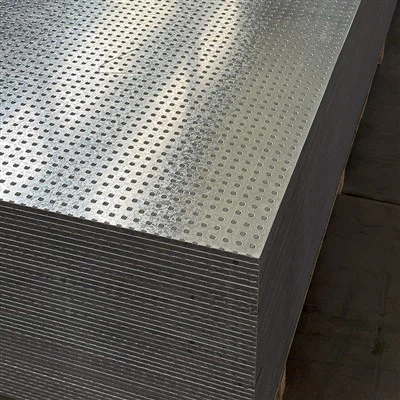
Blast resistant panel primarily refer to fiber-cement composite steel panels. They consist of a fiber-cement layer and a galvanized steel layer. Typically, the overall thickness is 9.5mm, with the cement layer at 8.5mm and the galvanized steel layer at 0.5mm, for a total thickness of 1mm on each side. Made of A1-grade non-combustible material, they are weather-resistant and corrosion-resistant, offering excellent cost-effectiveness. They have an explosion-proof pressure of 0.2-0.8MPa, a fire resistance limit of 2-4 hours, and a surface density of 20-35kg/m2. Long-term maintenance and upkeep are essential. Regular annual inspections are required to check for cracks in the blast resistant panel and deterioration of the sealant. Any problems should be repaired promptly. With proper maintenance, they can last up to 30-50 years.
If blast resistant panel are to deliver their full performance characteristics, strict requirements must be met during production. These requirements primarily include the following:
Steel plate: The carbon content must be controlled between 0.08% and 0.12% to ensure ductility and weldability. The surface texture must be uniform and suitable for stretch forming. Pre-treatment, including rust removal and degreasing, is required before production to ensure strong bonding with the cement layer.
Cement layer: The strength of the cement must not be less than 32.5 MPa. The sand must be medium, with a mud content of ≤1% and a sulfide content of ≤1%. This ensures density. Polymer emulsion is added to enhance crack resistance and impermeability. The compressive strength and flexural strength must be ≥11 MPa, the density must be 1.2-1.6 g/cm³, and the fire resistance rating must be A1, with a fire resistance limit of ≥4 hours.
Fiber cement and galvanized steel are tightly bonded together through a high-pressure lamination process. This production process ensures the blast resistant panel are lightweight and strong, while also providing fire, explosion, and corrosion resistance during use.
Blast resistant panel are not just explosion-proof materials; they also offer excellent fire-resistant properties. Moisture-proof, impact-resistant, shock-resistant, lightweight, and corrosion-resistant are all advantages. So, what should we consider during installation?
Choosing the appropriate specifications:
Choose the appropriate specifications based on the application scenario. The standard specifications for explosion-proof panels are 1200mm*2400mm*9.5mm. Specific dimensions can be customized by contacting the manufacturer, and custom cutting is possible.
Keel:
Choose C-shaped steel or square steel. The spacing depends on the requirements of the explosion-proof system. Use non-combustible, high-strength expansion bolts for fastening.
Joint battens:
For the joints of blast resistant panel, use battens of the required width, thickness, and quantity.
Fireproof rock wool:
When selecting, the thickness and density should be determined based on the requirements of the fire and explosion-resistant wall.
The entire installation process of blast resistant panel requires comprehensive consideration of multiple factors, including specifications, keel construction, and keel fixing method. Only proper installation can ensure optimal performance.
During packaging and transportation, blast resistant panel require graded protection against damage, corrosion, and deformation, tailored to different panel types. During transportation, they must be protected from moisture, rain, and humidity, to prevent localized rust caused by condensation during transport. To protect against transportation bumps and collisions during loading and unloading, care must be taken to avoid damage to corners and panel cracking, and to prevent friction between panels.
Each panel can be covered with PE protective film or pearl cotton, with particular emphasis on wrapping the corners. When stacking panels of the same specification and batch, limit the number to 10-15 panels, weighing ≤500kg, to facilitate forklift loading and unloading. Cardboard can be placed between panels to prevent friction. Use PP strapping in a "cross" pattern or wrap with stretch film to ensure a secure stack.
When transporting blast resistant panel, consider the transportation method, distance, and environmental conditions to control bumps, prevent corrosion, and avoid overloading. For road transportation, flatbed trucks can be used, but open trucks are strictly prohibited for rail transportation. For sea transportation, containers must be used, and a "moisture-proof warning" should be posted inside the container to remind the unloader to open the box and ventilate it in time.


Hot Tags: blast resistant panel, China blast resistant panel manufacturers, suppliers, factory, Fiber Cement Composite Panel, Fiber Cement Composite Steel Plate for Construction, Fire Barrier Durable Impact Fiber Cement Board, Fire Resistant Blastproof Steel Cement Boards, Moisture resistant Fiber Cement Composite Steel Plate, Rectangular Fiber Cement Composite Steel Plate
You Might Also Like


Send Inquiry